
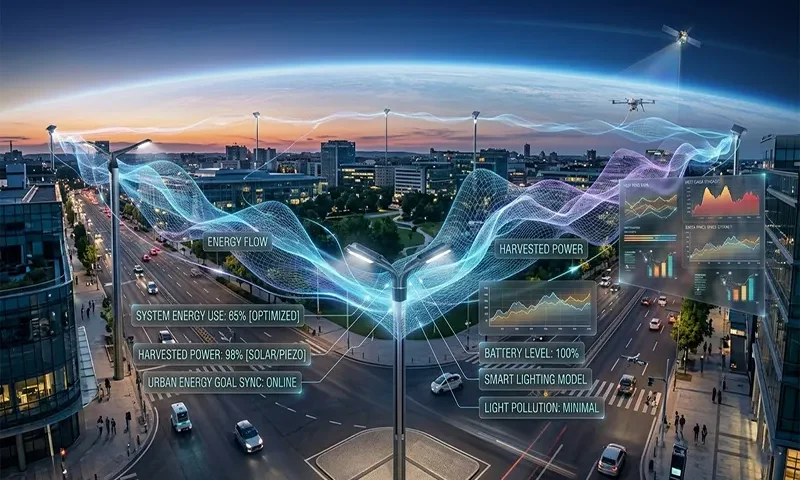
Adaptive AI Street Lighting Systems for Urban Energy Efficiency Goals
As global cities strive to meet 2026 carbon neutrality targets, street lighting has emerged as a primary lever for energy reduction. Traditionally representing up to 40% of a municipality’s total electricity expenditure, lighting infrastructure is being reimagined. The transition from static LED schedules to Adaptive AI Street Lighting allows the urban grid to function as a responsive “neural network.” By utilizing edge-based AI and real-time sensor fusion, cities can reduce energy consumption by an additional 40–60% beyond standard LED retrofits while simultaneously enhancing public safety and biodiversity.
The Luminous Cost of Urbanization
For over a century, street lighting followed a binary logic: it was either on or off. This static approach resulted in a massive “luminous waste,” where entire boulevards were illuminated at 100% capacity in the early hours of the morning despite zero pedestrian or vehicular traffic.
The “Dimming Dilemma” has long haunted urban planners—how to reduce the massive … Read the rest
