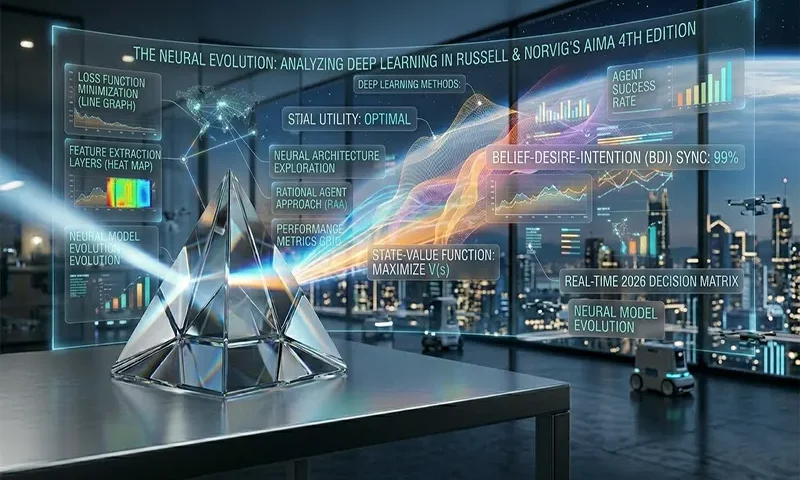
The Neural Evolution: Analyzing Deep Learning in Russell & Norvig’s AIMA 4th Edition

For decades, Stuart Russell and Peter Norvig’s Artificial Intelligence: A Modern Approach (AIMA) has been the definitive roadmap for the field. While earlier editions focused heavily on symbolic logic and search, the 4th Edition marks a paradigm shift. It elevates Deep Learning from a niche sub-field to a foundational pillar of the “Intelligent Agent.” This article explores how Chapters 19 through 25 reconcile the data-driven power of neural networks with the classical pursuit of rational agency.

The ‘Modern’ in AIMA

The transition from the 3rd to the 4th Edition of AIMA represents the single largest update in the book’s history. The shift is philosophical: we have moved from “hand-crafted knowledge”—where humans define the rules—to “data-driven learning,” where agents discover patterns for themselves.

The unifying theme remains the Intelligent Agent, but the 4th Edition acknowledges that for an agent to be truly intelligent in the real world, it must be … Read the rest

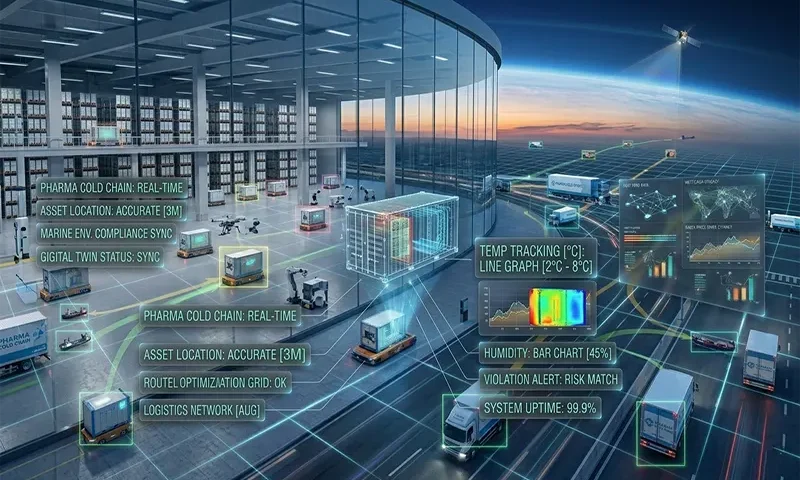
Real-Time Asset Tracking with Digital Twins for Pharmaceutical Cold Chains

In 2026, the pharmaceutical industry has reached a “zero-tolerance” threshold for logistics failures. The rise of personalized medicine, mRNA platforms, and complex biologics requires a level of environmental control that traditional data loggers simply cannot provide. The solution is the Digital Twin—a real-time, virtual replica of the physical shipment. By fusing IoT sensor data with predictive simulation models, pharmaceutical companies are moving from reactive visibility to prescriptive control, ensuring that life-saving therapies reach patients with their molecular integrity fully intact.

From Visibility to Predictability

The global pharmaceutical cold chain is no longer just about “keeping things cold.” With the arrival of Cell and Gene Therapies (CGTs) that require cryogenic temperatures of $-150\text{°C}$ and vaccines that must remain within a strict $2\text{°C}$ to $8\text{°C}$ window, the margin for error is non-existent.

In this high-stakes environment, a Digital Twin acts as a bidirectional bridge. It is not merely a “dot on … Read the rest

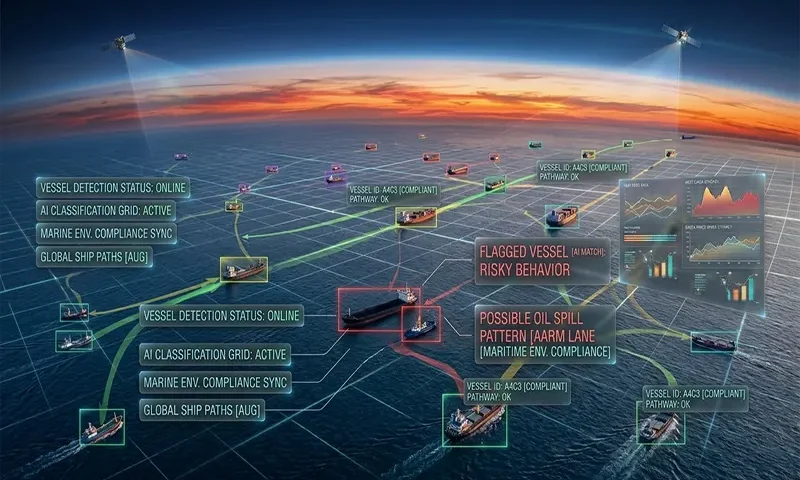
AI-Powered Satellite Vessel Detection for Maritime Environmental Compliance

The “High Seas” have traditionally lived up to their name as a lawless frontier, where the vastness of the ocean provided a veil for environmental negligence. In 2026, this veil has been pierced. The convergence of Synthetic Aperture Radar (SAR), high-revisit satellite constellations, and edge-based Computer Vision has created a global, transparent maritime monitoring system. By identifying “Dark Vessels” and attributing environmental damage in real-time, AI-powered orbital intelligence is transforming maritime law from a set of suggestions into an enforceable reality.

The Unseen High Seas

Monitoring the world’s oceans—covering over 70% of the Earth’s surface—has historically been an impossible task for physical patrols. The primary tool for maritime safety, the Automatic Identification System (AIS), relies on vessels voluntarily broadcasting their position. However, vessels engaged in illegal activity—known as “Dark Vessels”—simply turn off their transponders to vanish from digital maps.

As international regulations like MARPOL and the IMO 2030 decarbonization … Read the rest

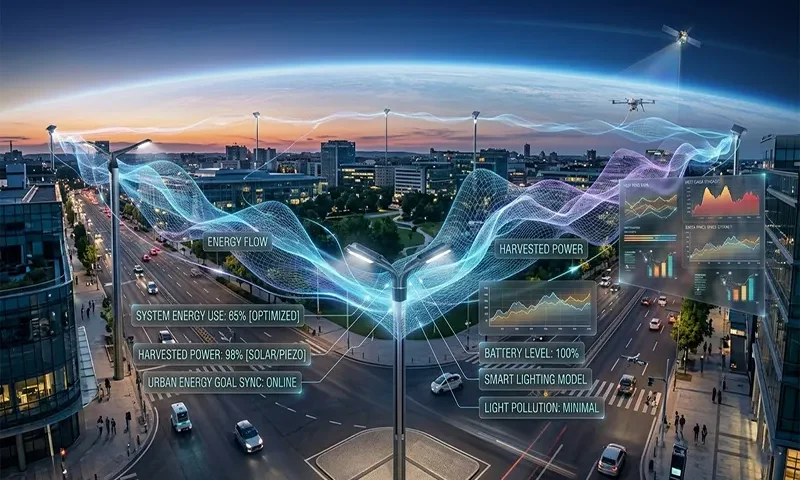
Adaptive AI Street Lighting Systems for Urban Energy Efficiency Goals

As global cities strive to meet 2026 carbon neutrality targets, street lighting has emerged as a primary lever for energy reduction. Traditionally representing up to 40% of a municipality’s total electricity expenditure, lighting infrastructure is being reimagined. The transition from static LED schedules to Adaptive AI Street Lighting allows the urban grid to function as a responsive “neural network.” By utilizing edge-based AI and real-time sensor fusion, cities can reduce energy consumption by an additional 40–60% beyond standard LED retrofits while simultaneously enhancing public safety and biodiversity.

The Luminous Cost of Urbanization

For over a century, street lighting followed a binary logic: it was either on or off. This static approach resulted in a massive “luminous waste,” where entire boulevards were illuminated at 100% capacity in the early hours of the morning despite zero pedestrian or vehicular traffic.

The “Dimming Dilemma” has long haunted urban planners—how to reduce the massive … Read the rest