Edge AI Hardware Requirements for Real-Time Anomaly Detection in Manufacturing

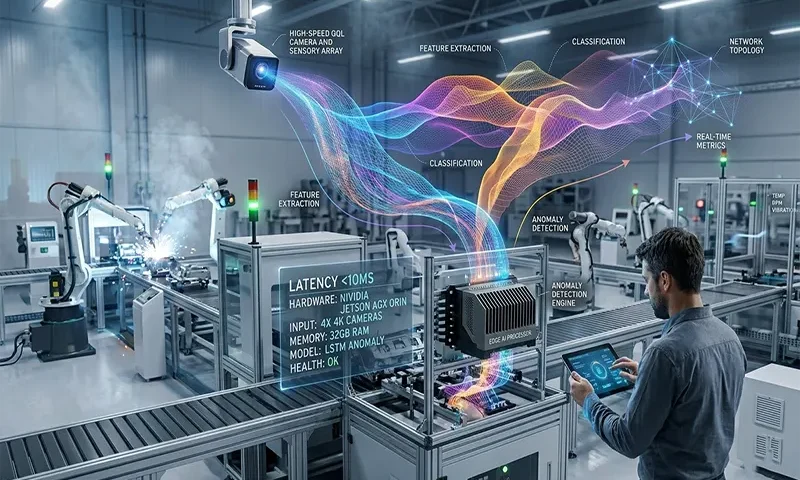
In the 2026 industrial landscape, the transition from “cloud-augmented” to “edge-autonomous” manufacturing is complete. Real-time anomaly detection—the ability to identify and respond to micro-deviations in production within milliseconds—now dictates the competitive edge. Achieving this requires a specialized hardware stack that balances raw throughput ($TOPS$) with extreme environmental ruggedization and ultra-low latency I/O.

The Physics of the Production Line

In modern high-speed manufacturing, “real-time” is no longer a marketing buzzword; it is a physical requirement defined by the speed of the assembly line. A beverage bottling plant operating at 1,200 units per minute allows for a window of less than $50ms$ to detect a structural flaw and trigger a pneumatic reject arm.

Cloud-based AI fails in this environment due to the Latent Jitter inherent in wide-area networks. Even with 5G integration, the round-trip time ($RTT$) for data transmission, combined with cloud inference variability, often exceeds the safety-critical thresholds. Consequently, anomaly detection … Read the rest


5 Core Benefits of Data Observability for Your Data Team

The modern digital-first reality means that data teams are operating more complex pipelines distributed across multiple platforms. Maintaining accurate, reliable, and accessible data is not a simple task. That is where data observability comes in — to provide complete visibility into the health of your data ecosystem. 

Why Your Data Team Needs Data Observability

Any contemporary data team cannot do without the ability to deliver improved insights and enhanced business results. These are five fundamental advantages it presents to present-day data teams.

Improved data reliability

Any decision is based on reliable data. Data observability enables software development teams to identify data anomalies, such as missing fields, schema modifications, or broken pipelines, before they reach their downstream consumers. This ensures that stakeholders can be assured of valuable insights.

Faster issue resolution

It is common to take time to identify the source of the problem. It is observable in real-time with alerting, enabling … Read the rest

Ethical Considerations for Data Privacy in Connected IoT Ecosystems

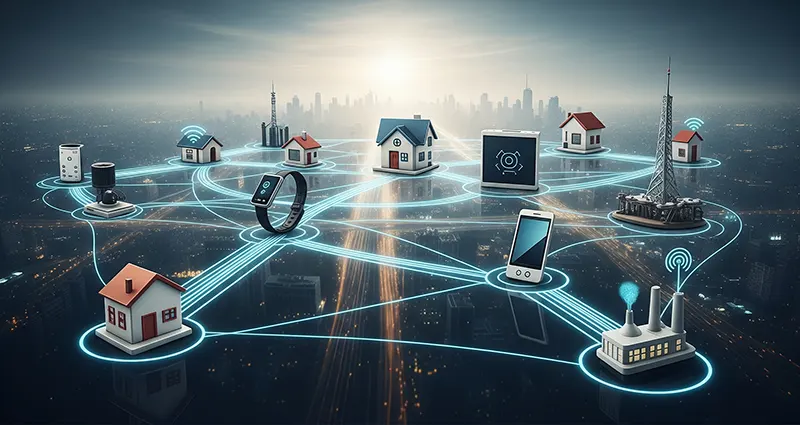
The rapid proliferation of Internet of Things (IoT) devices has led to a connected world where data is constantly being generated, collected, and shared. While IoT technologies offer numerous benefits in terms of convenience, efficiency, and automation, they also raise important ethical considerations, particularly when it comes to data privacy and security. In this article, we explore the implications of data privacy within connected IoT ecosystems and the ethical considerations that must be addressed to protect user information and uphold ethical standards.

Understanding Data Privacy in Connected IoT Ecosystems

1. Data Collection and Sharing:

IoT devices gather vast amounts of data about users, their behaviors, and their environments. This data can include personal information, usage patterns, location data, biometric data, and more.

2. Data Security and Breach Risks:

The interconnected nature of IoT ecosystems creates vulnerabilities that can be exploited by cybercriminals. Data breaches in IoT devices can have serious … Read the rest

The Future of Wearable IoT Technology for Health Monitoring

The convergence of wearable Internet of Things (IoT) technology and healthcare has paved the way for a new era of personalized and proactive health monitoring. Wearable devices equipped with sensors, connectivity, and analytics capabilities are revolutionizing the healthcare industry by enabling continuous and real-time monitoring of vital signs, health parameters, and lifestyle behaviors. Let’s delve into the future of wearable IoT technology for health monitoring and its potential impact on individuals and healthcare providers.

Advancements in Wearable IoT Technology for Health Monitoring:

1. Multi-Sensor Capabilities:

Future wearable devices are expected to integrate multiple sensors that can track a wide range of health metrics, including heart rate, blood pressure, oxygen saturation, temperature, and activity levels, providing a comprehensive view of an individual’s health status.

2. Real-Time Data Monitoring:

Wearable IoT devices will enable real-time monitoring of health data, allowing individuals and healthcare professionals to receive immediate alerts, notifications, and insights regarding … Read the rest

The Future of Farming: How IoT is Revolutionizing Crop Monitoring in Precision Agriculture

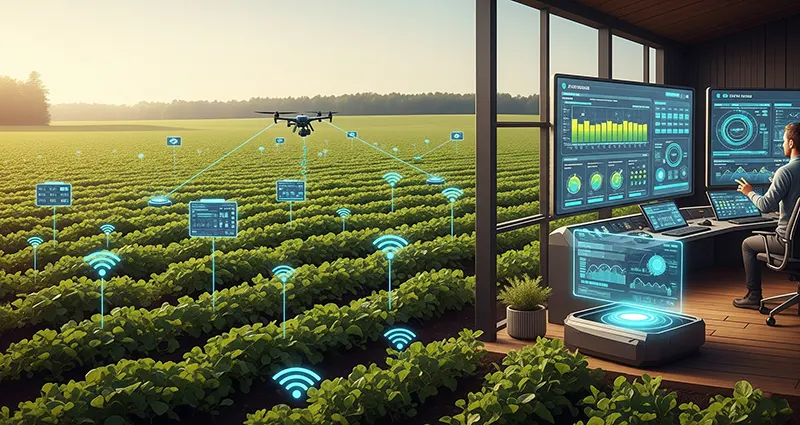
The agricultural landscape is undergoing a significant transformation, driven by the integration of cutting-edge technologies. Among these, the Internet of Things (IoT) stands out as a pivotal force, ushering in an era of “precision agriculture” that promises increased efficiency, reduced waste, and enhanced sustainability. At the heart of this revolution lies the ability of IoT devices to provide real-time, granular data for comprehensive crop monitoring, empowering farmers with unprecedented insights into their fields.

What is Precision Agriculture?

Precision agriculture is a data-driven approach that optimizes agricultural inputs and practices to maximize crop yield and minimize resource waste. It moves away from traditional, uniform farming methods, instead tailoring agronomic techniques to the specific needs of individual fields, crops, or even plants. This customization is made possible by the continuous flow of data collected through IoT devices.

Key Applications of IoT in Crop Monitoring:

The applications of IoT in crop monitoring are … Read the rest